Review: Cute Black Bear School Supplies Design
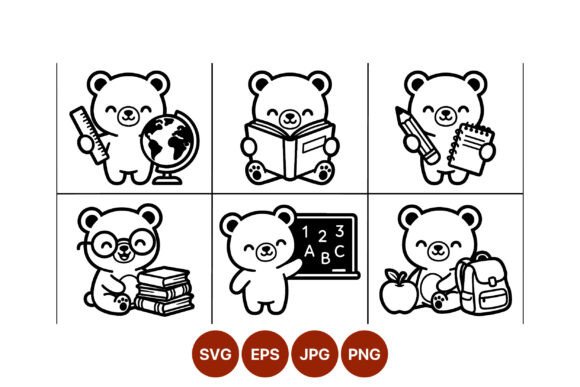
As a designer who has spent countless hours digitizing and stitching out thousands of files, I have developed a keen eye for what works in the hoop and what looks great on paper but fails in thread. When I first loaded the Cute Black Bear Cartoon School Supplies set into my viewer, I was looking for more than just adorable aesthetics. I was looking for structural integrity, stitch path logic, and commercial viability. This collection of six black and white cartoon bear illustrations offers a charming narrative, but does it hold up under the needle? After reviewing the layout and considering its application in real-world projects, here is my practical assessment for fellow embroidery professionals and craft entrepreneurs.
First Impressions and Visual Personality
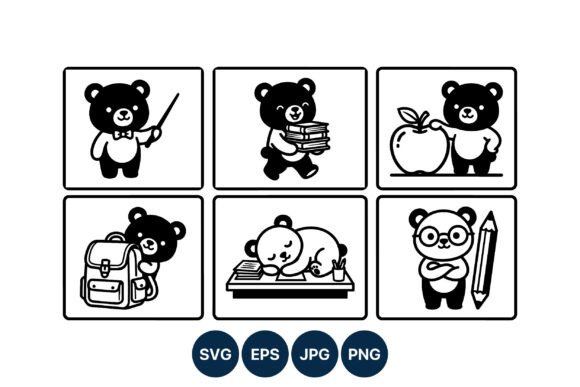
The immediate appeal of this design set lies in its cohesive storytelling. The characters are not random; they form a classroom scene that feels warm and inviting. We see a bear teaching with a pointer, another carrying a stack of books, one pointing at an apple, a student holding a backpack, a bear sleeping on a desk surrounded by pencils, and a standing figure. The black and white line-art style is a deliberate choice that translates exceptionally well to embroidery. Unlike complex photorealistic graphics that require hundreds of thread colors and dense fill stitches, these Illustrations rely on clean outlines and minimal shading. This simplicity is a strength, not a weakness, especially for small-scale embroidery where detail can easily get lost.
The mood is playful yet organized, making it ideal for educational themes, back-to-school promotions, or nursery decor. For an Etsy seller or small shop product creator, this versatility is crucial. You are not limited to one seasonal trend; these bears can be marketed year-round as part of a "study buddy" collection or used specifically for August and September rushes. The visual personality is friendly without being overly childish, which broadens the potential customer base to include teachers, parents, and even college students looking for cute custom apparel.
Real-World Application and Stitching Performance
To truly evaluate a machine embroidery design, you must imagine it stitched out. I mentally placed these bears on various substrates to test their adaptability. The clean lines suggest that these designs would perform beautifully as satin stitch borders or light fill stitch areas, depending on the size. For a tote bag design, the bear carrying books or holding a backpack would be a standout feature. The sturdy canvas of a tote provides the perfect stability for the outlines, ensuring the shapes remain crisp and defined.
Consider a sweatshirt embroidery project. The bear sleeping on a desk is particularly endearing for this application. Placed on the left chest or as a larger back print, it adds a touch of humor and comfort. However, the texture of fleece or French terry requires careful attention to stitch density. If the design is too dense, it will pull the fabric; if too light, it may get lost in the pile. Since these are black and white Graphics, using a high-contrast thread color like navy, forest green, or classic black against a heather grey sweatshirt would create a sophisticated, modern look that appeals to adult buyers, not just children.
For baby embroidery, the scale becomes critical. The bear pointing at an apple could be a delightful accent on a onesie or a burp cloth. In this context, the simplicity of the design is a major advantage. Babies move, and their clothes undergo frequent washing. Designs with fewer jumps and simpler paths tend to hold up better over time. The lack of intricate internal detailing means there are fewer tiny stitches to break or unravel, increasing the durability of the finished product.
Navigating Fabric Challenges and Hoop Constraints
While the design is versatile, it is not without its technical considerations. Embroidery on curved surfaces, such as caps, requires a different approach. The bear teaching with a pointer might need to be resized to fit within a standard cap frame without distorting the proportions. When working on stretchy fabrics like jersey knits for t-shirts, using the correct stabilizer is non-negotiable. A cut-away stabilizer would likely be necessary to prevent the fabric from puckering around the outline stitches, especially if the design includes any solid filled areas like the apples or books.
Dark fabrics present another challenge. Since the design is conceptualized in black and white, stitching it in black thread on a black shirt will render it invisible. This is where creativity comes in. You might choose to use white or metallic thread for a striking contrast, or perhaps treat the design as an applique design by adding a fabric layer underneath the stitch outline. This technique not only solves the visibility issue but also adds texture and value to the handmade product. Always test your thread colors on scrap fabric before committing to the final garment. What looks good on screen may behave differently under the machine lights.
Commercial Viability and Brand Consistency
For those running a craft business, consistency is key to building brand trust. This set of six bears allows for a coordinated collection. You can offer a matching set of items: a backpack tag, a lunchbox label, and a pencil case, each featuring a different bear from the series. This strategy increases the average order value and encourages customers to buy multiple items. The professional quality of the digital embroidery file reflects directly on your brand. Sloppy digitizing leads to sloppy products, which leads to unhappy customers. These designs appear clean and well-structured, suggesting a high level of professionalism that can enhance buyer engagement.
When creating printable mockup images for your online store, ensure that the digital representation matches the stitched reality. Use high-quality photos of the actual embroidered items rather than relying solely on digital overlays. Customers want to see how the stitch density interacts with the fabric texture. Showing the design on a variety of items—such as a pillow cover, a kitchen towel, or an embroidered patch—demonstrates the flexibility of the design and helps customers visualize it in their own homes.
Practical Designer Notes for Best Results
Before you launch this design into your production line, take a moment to review the technical specifications. Since the product description does not provide exact stitch counts or file formats, you must verify these details upon download. Check if the hoop size requirements match your machine’s capabilities. If you are planning to sell these as commercial embroidery assets or finished goods, confirm the licensing terms. Some designers allow unlimited sales of finished physical items, while others restrict the sale of the digital file itself.
- Test on Scrap: Always stitch a test sample on the same fabric type you intend to use for the final product. This helps you adjust tension and stabilizer choices.
- Check Contrast: Ensure your thread color contrasts sufficiently with the fabric. For black and white designs, consider using off-white or cream threads for a softer, vintage look on natural fibers.
- Inspect Details: Zoom in on the digitized file to check for unnecessary jump stitches or overlapping paths that could cause thread breaks.
- Consider Scale: Resize the design proportionally. Shrinking it too much may cause the satin stitches to merge, while enlarging it too much may expose gaps in the fill.
- Stabilizer Selection: Match your stabilizer to the fabric weight. Lightweight fabrics need more support, while heavy denim may require less.
In conclusion, the Cute Black Bear Cartoon School Supplies set is a strong contender for any embroidery professional’s library. Its charm is undeniable, but its true value lies in its practical adaptability. Whether you are creating a personalized gift for a teacher, stocking your Etsy shop with back-to-school essentials, or designing a unique holiday embroidery piece, these bears offer a reliable and engaging foundation. By paying attention to fabric choice, stabilizer use, and stitch optimization, you can transform these digital design assets into high-quality, beloved embroidery projects that resonate with customers and stand the test of time.