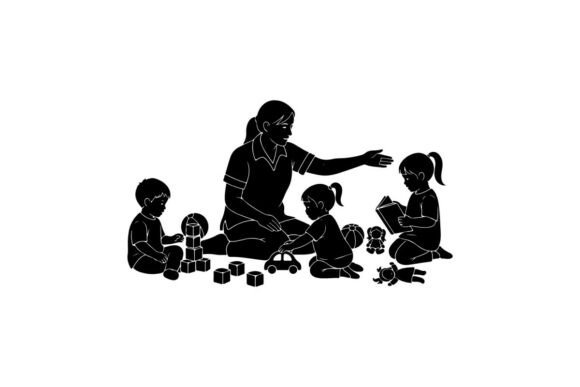
Reviewing Teacher Helping Children with Building B
As an embroidery designer who has spent years translating digital art into thread, I have learned that not all graphics are created equal. Some designs look stunning on a screen but turn into a tangled mess under the needle. When I first opened the file for Teacher Helping Children with Building B, my immediate goal was to determine if this piece of artwork could hold up in a real-world production environment. This is not just about aesthetics; it is about functionality, stitchability, and commercial viability.
The design falls under the category of Illustrations and is classified as Graphics, specifically marketed as premium silhouette clip art. For those of us running small shops or managing client orders, the term "silhouette" usually signals a specific set of challenges and opportunities. Silhouettes rely heavily on shape and negative space rather than internal detail. My review focuses on how Teacher Helping Children with Building B performs when moved from a static image to a tactile, stitched reality.
First Impressions and Visual Mood
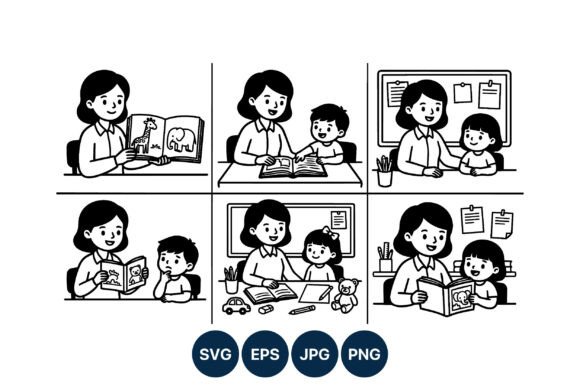
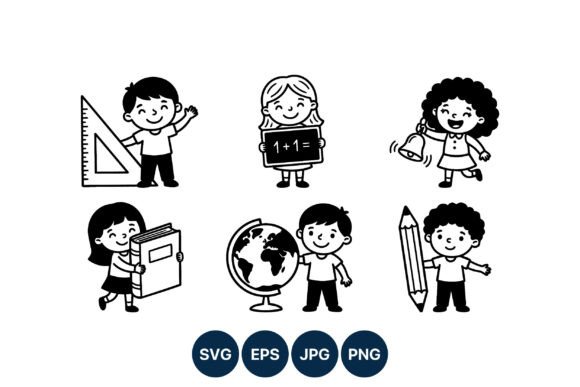
The initial visual impact of Teacher Helping Children with Building B is one of warmth and community. The composition features a central figure assisting smaller figures, likely students, engaged in a constructive activity. The clean lines suggest a timeless appeal, avoiding trendy elements that might date the product quickly. For an embroidery project, this simplicity is often a blessing. Complex gradients and photo-realistic details rarely translate well to thread, but strong, recognizable shapes do.
The mood here is educational and nurturing. This makes the design immediately suitable for specific niches: back-to-school promotions, teacher appreciation gifts, daycare branding, or family-oriented boutique items. As a designer, I appreciate that the layout does not feel cluttered. In embroidery, clutter is the enemy of clarity. When you reduce a design to thread, every millimeter counts. The open spaces in this graphic allow the fabric texture to breathe, which is crucial for maintaining a professional look.
Real-World Application Scenarios
To truly evaluate Teacher Helping Children with Building B, I mentally placed it on several common substrates. Let us consider a custom embroidered tote bag. Tote bags are typically made from canvas or heavy cotton, which have a distinct weave. A silhouette design works exceptionally well here because the bold outlines stand out against the textured background. If this were a highly detailed illustration, the threads might sink into the weave, losing definition. However, the clean nature of this graphic ensures high visibility.
Another prime candidate is sweatshirt embroidery. Hoodies and crewnecks are staples for school staff and parent groups. The design’s horizontal orientation fits nicely across the chest or on the upper back. When stitching on fleece or terry cloth, stitch density becomes a critical factor. Since this is a silhouette, there is a risk of the design becoming too dense if filled completely. A smart approach would be to use a combination of satin stitch for the outlines and a lighter fill stitch for the interior, or perhaps leave parts unfilled to let the garment color show through. This reduces bulk and keeps the garment comfortable to wear.
For baby embroidery, such as on onesies or bibs, the scale must be reduced. Here, the simplicity of Teacher Helping Children with Building B shines again. Tiny details often get lost or cause puckering on small hoops. By scaling down this graphic, we retain the recognizability of the figures without overwhelming the small fabric area. It makes for a heartfelt personalized gift that feels bespoke rather than mass-produced.
Technical Considerations for Stitching
While the aesthetic is strong, the technical execution requires careful planning. Because this is provided as a graphic or clip art, it may not come pre-digitized as a machine embroidery design. If you are purchasing this as a digital embroidery file, ensure it has been properly programmed. If you are digitizing it yourself from the Illustrations source, pay close attention to the corners. Sharp angles in silhouettes can cause thread breaks or bird nests if the needle direction changes too abruptly. Using proper underlay stitches is non-negotiable here to stabilize the top stitches.
Stitch density is another major concern. A solid block of fill stitch in a silhouette can pull the fabric, causing distortion. I recommend testing the design on scrap fabric first. Check how the thread colors interact. High contrast is key. If you are stitching on a dark fabric, use light thread colors to make the figures pop. Conversely, on light fabric, dark threads will define the shape clearly. Always test in black and white mockups first to ensure the shape reads correctly without relying on color cues.
Fabric choice matters immensely. For stretchy fabrics like jersey knits, a cut-away stabilizer is essential to prevent the design from warping after washing. For woven fabrics like aprons or tea towels, a tear-away stabilizer might suffice, but given the potential size of the figures, a medium-weight cut-away provides better long-term durability. Remember, products like kitchen towels undergo frequent washing and high heat. The integrity of Teacher Helping Children with Building B depends on the foundation you build beneath the threads.
Commercial Viability and Brand Value
For Etsy sellers and craft business owners, the end goal is a finished product that sells. Does Teacher Helping Children with Building B add value? Absolutely. It taps into the emotional market of education and family. Customers are not just buying a stitched image; they are buying a sentiment. A tote bag with this design becomes a statement piece for a teacher. A pillow cover with this graphic becomes a cozy reminder of family bonding.
However, professionalism is paramount. A poorly stitched silhouette looks amateurish. Ensure your hoop size is appropriate. Do not try to cram a large design into a 4x4 hoop if it compromises the detail. If the design includes tiny lettering or intricate connections between the figures, verify that these elements are thick enough to survive the stitching process. Thin lines can easily snap or look sparse.
When creating printable mockups for your online shop, use high-resolution images of the stitched result. Show the texture of the thread. Highlight the cleanliness of the edges. This builds customer trust. Buyers want to see that the embroidery file produces a crisp, clean result. If the design is intended for commercial embroidery, confirm the licensing terms. Some clip art licenses allow for physical products but restrict digital resale. Always read the fine print before listing items in your small shop product lineup.
Final Verdict and Designer Notes
In conclusion, Teacher Helping Children with Building B is a versatile asset for the right projects. Its strength lies in its simplicity and emotional resonance. It is not a design that tries to do too much, which makes it reliable for various applications, from caps to blankets. The key to success with this graphic is respecting the limitations of the medium. Thread has thickness; fabric has tension. By adjusting stitch density, choosing the right stabilizer, and selecting contrasting thread colors, you can transform this clean, timeless illustration into a high-quality handmade product.
Before committing to a large batch of custom apparel or holiday embroidery orders, run a test stitch. Inspect the back of the hoop for loose threads or excessive buildup. Check the front for puckering. If the design holds up on challenging fabrics like pique polo shirts or thin cotton, it will perform well anywhere. For designers looking to expand their portfolio with meaningful, community-focused imagery, this design offers a solid foundation. It bridges the gap between digital art and tangible craft, providing a clear path to creating items that customers will cherish.