Review: Happy Boy with Backpack Waving at School
As a designer who has spent countless hours digitizing and testing machine embroidery design files, I approach every new asset with a mix of curiosity and caution. We have all been there: you find a charming graphic online, download it, and then realize too late that the lines are too thin for satin stitch or the details vanish on textured fabric. Today, I am taking a close look at Happy Boy with Backpack Waving at School, a black and white vector illustration that promises to bring a cheerful, academic vibe to our projects. This is not just a review of a pretty picture; it is an evaluation of how this specific piece of art translates into thread, hoop, and fabric for real-world applications.
First Impressions and Visual Personality
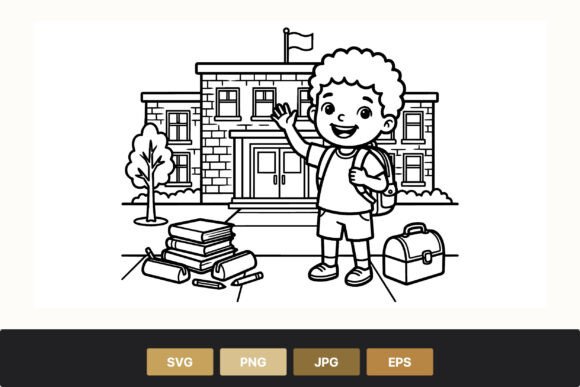
The first thing that strikes me about Happy Boy with Backpack Waving at School is its clarity. In the world of Illustrations and Graphics, simplicity is often king, especially when we are talking about embroidery. The design features a cheerful boy, a backpack, and a school backdrop with books and supplies. The mood is undeniably positive and welcoming. For a designer, this is a strong starting point because the emotional resonance is immediate. It feels like a "back-to-school" staple.
However, visual appeal on a screen does not always equal stitching success. The black and white vector format suggests high contrast, which is excellent for readability. But as an experienced reviewer, I look at the line weights. Are the outlines of the backpack straps thick enough to hold a satin stitch? Is the waving hand detailed enough to remain distinct, or will it merge into the arm? These are the questions that determine whether a design is merely decorative or truly functional for a craft business.
Real-World Application: The Custom Tote Bag Test
To truly evaluate Happy Boy with Backpack Waving at School, I imagined a specific client request: a custom embroidered tote bag for a local elementary school fundraiser. This is a classic use case for this type of imagery. Tote bags are usually made of canvas or heavy cotton, which provides a stable base for stitching.
In this scenario, the design’s layout works well. The horizontal spread of the school building and the boy allows for a wide hoop usage, maximizing visibility. If I were stitching this as a tote bag design, I would likely opt for a fill stitch on the larger areas like the backpack and the school windows to add texture and durability. The waving gesture of the boy adds a dynamic element that breaks the static nature of typical school logos. For an Etsy seller or a small shop product owner, this kind of personality helps a item stand out in a crowded market. It transforms a generic bag into a personalized gift that parents would be proud to carry.
Versatility Across Products
Beyond tote bags, where else does this design shine? I see strong potential in sweatshirt embroidery. A left-chest placement of just the boy and the backpack, perhaps scaled down, could serve as a subtle branding element for a tutoring service or a children’s clothing line. The clean lines of the vector illustration suggest it would scale down reasonably well, provided the stitch density is adjusted to prevent puckering on the knit fabric.
For baby embroidery projects, such as bibs or burp cloths, the theme is appropriate, but caution is needed. Babies are messy, and items are washed frequently. If the design includes tiny details like the spines of the books or small school supplies, these might get lost or become snag points after multiple wash cycles. In such cases, simplifying the design or using an applique design technique where fabric patches form the shapes could be a smarter, more durable choice than relying solely on thread.
I also considered this for an embroidered patch. Patches require dense stitching and clear borders. The strong outlines in Happy Boy with Backpack Waving at School would translate beautifully into a merrowed edge patch. This opens up opportunities for commercial embroidery clients who want iron-on badges for uniforms or jackets.
Technical Considerations and Potential Pitfalls
While the design is charming, there are areas where a designer must exercise care. The description mentions stacks of books and school supplies nearby. In embroidery, small, clustered details can become a nightmare if the thread colors do not have enough contrast. If you are stitching this on a dark fabric, you must ensure your light threads are bright enough to pop. Conversely, on light fabric, dark threads need to be dense enough to cover the background completely.
Another critical factor is the hoop size. Since this is a scene with multiple elements, it likely requires a medium to large hoop. Trying to cram this entire scene into a 4x4 inch hoop would result in loss of detail and potential needle breaks. Always check the dimensions of the digital embroidery file before committing to a project. If the package does not specify the exact stitch count or recommended hoop sizes, you must test it on scrap fabric first. This is non-negotiable for professional results.
Fabric texture also plays a huge role. On fluffy towels or fuzzy fleece, fine details like the boy’s facial features or the pages of the books may disappear. In these instances, using a cutaway stabilizer is essential to support the stitches, but you might also need to simplify the design by removing the smallest elements. For curved surfaces like caps, the horizontal width of the school building might cause distortion. It is often better to isolate the boy character for hat embroidery rather than using the full scene.
Enhancing Product Value and Brand Consistency
From a business perspective, using high-quality design assets like Happy Boy with Backpack Waving at School directly impacts customer trust. A clean, well-digitized design signals professionalism. When customers see crisp lines and balanced colors in your finished product, they perceive higher value. This is crucial for custom apparel and boutique branding.
Furthermore, this design fits seamlessly into seasonal marketing. It is perfect for holiday embroidery campaigns leading up to the start of the school year. You can create cohesive collections by pairing this design with other school-themed graphics. For digital product sellers, offering this as part of a bundle with matching fonts or patterns can increase average order value. Always remember to create printable mockup images that show the design on various products to help customers visualize the end result.
Final Designer Notes
Before you load this embroidery file into your machine, here is my practical checklist:
- Test on Scrap Fabric: Always run a test stitch-out on the same type of fabric you plan to use for the final product. This reveals issues with tension and density.
- Check Thread Contrast: Ensure your chosen thread colors provide sufficient contrast against the fabric background.
- Verify Licensing: Confirm whether the license allows for commercial use if you plan to sell items featuring this design. Never assume; always read the terms.
- Inspect Small Details: Zoom in on the vector file. If lines are too close together, consider merging them or increasing the gap to prevent thread bunching.
- Use Proper Stabilizer: Match your stabilizer to your fabric. Heavy fabrics may need less support, while stretchy knits require robust stabilization.
In conclusion, Happy Boy with Backpack Waving at School is a versatile and emotionally engaging design that holds great promise for a variety of embroidery projects. With careful attention to technical details like stitch density, hoop size, and fabric choice, it can elevate your handmade product lineup. Whether you are creating a personalized gift for a neighbor’s child or stocking your online store with back-to-school essentials, this design offers a solid foundation for creative expression. Just remember that the magic lies not just in the image, but in how well you execute it in thread.